Everest Base Camp trek cost 2026: permits, guide and porter, teahouses and Lukla flights
ⓘ Contains affiliate links: we may earn a commission when you book, at no extra cost to you. How we make money
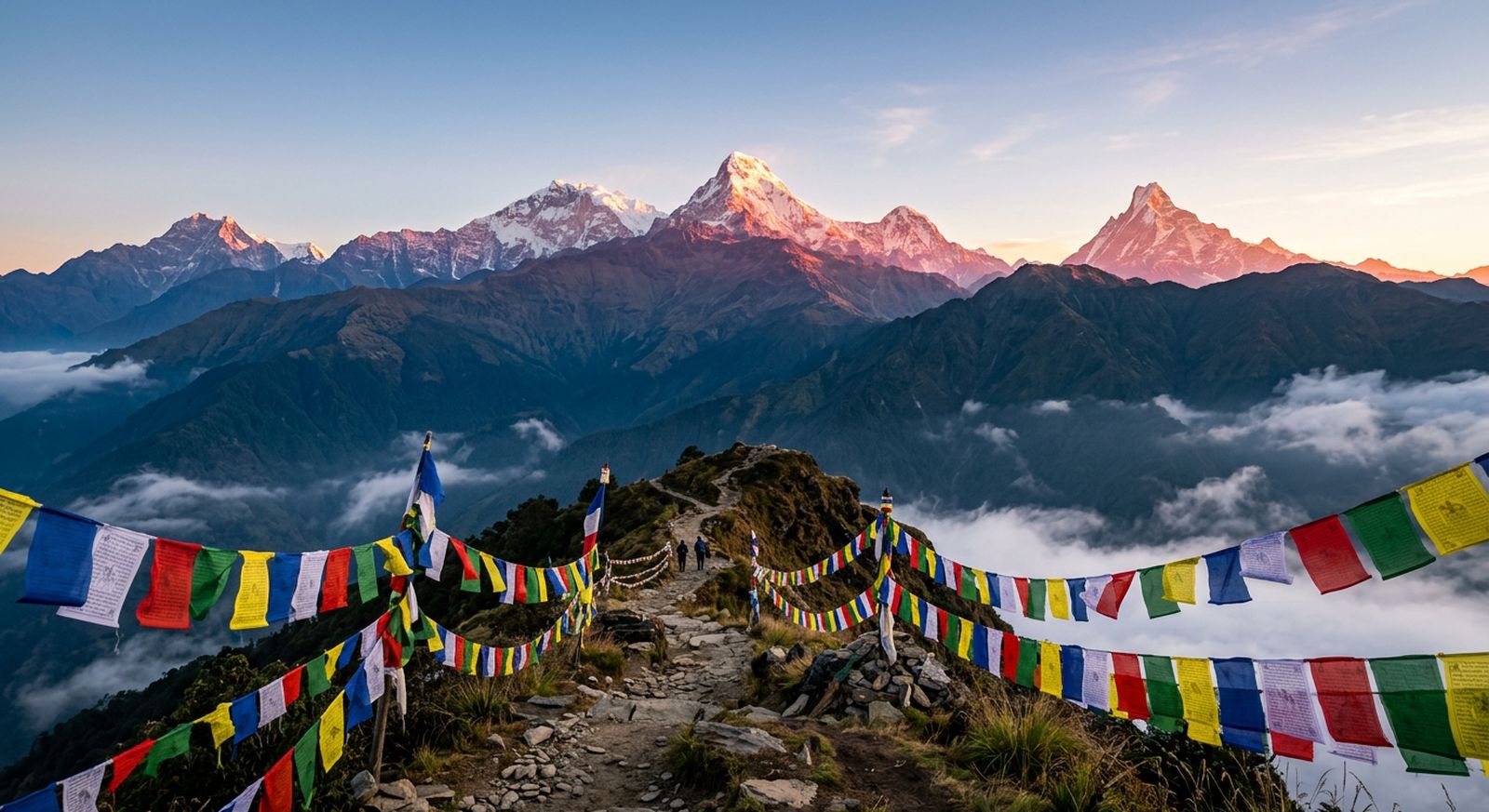
The Everest Base Camp (EBC) trek is one of the world's great walks, and it costs less than most people expect, as long as you know where the money goes. This guide breaks down every main cost for a classic 12 to 14-day trek from Lukla: permits, flights, guide and porter, teahouses, food and the extras nobody mentions. Official fees come from the issuing authorities; market prices are typical ranges from recent 2026 sources. All figures were checked October 2026 and are approximate.
The short answer
For a trekker from Europe, the trek itself (from Kathmandu back to Kathmandu, with a licensed guide and a shared porter) usually lands somewhere between about USD 1,300 and 2,100 per person before tips, if you organise it piece by piece. Agency packages that bundle flights, permits, guide, porter and lodges commonly start from around USD 1,200–1,400 per person for a pair, and climb with comfort and group size. On top of that come your international flights, the Nepal visa, travel insurance and a few nights in Kathmandu.
1. Permits: about NPR 6,000
The standard Lukla route needs two local payments:
- Sagarmatha National Park entry: NPR 3,000 per foreign visitor (NPR 1,500 for SAARC nationals; children under 10 free), according to the Nepal Tourism Board's park fee table. You can pay at the Tourist Service Center in Kathmandu (Bhrikutimandap) or at the park entry point at Monjo. Several 2026 trekking sources report 13% VAT being added at the counter, so budget around NPR 3,400 to be safe.
- Khumbu Pasang Lhamu Rural Municipality "Trek-Card": NPR 3,000 for most foreigners (NPR 2,000 for SAARC and Chinese citizens), per the municipality's own service page. It is issued at the Tourist Information Center in Lukla in about 15 minutes; bring your passport and a recent photo.
TIMS and the guide rule: this is where official sources disagree. The Nepal Tourism Board's revised TIMS provision (in force since 31 March 2023) lists the Everest Base Camp trek among routes that require a licensed guide and an agency-issued TIMS card (NPR 2,000). The Khumbu municipality, which runs its own Trek-Card system, said publicly in 2023 that a guide is not mandatory in its area. In practice most 2026 trekking sources say TIMS is not collected on the standard route, but rules can be enforced differently from one season to the next. Ask your agency in writing what they will buy for you, and if you trek independently, check with the Nepal Tourism Board before you go.
2. Flights to Lukla: about USD 180–260 each way
Most trekkers fly to Lukla (2,846 m), the short mountain airstrip where the trail starts. One-way fares for foreigners in 2026 are typically:
- Ramechhap (Manthali) to Lukla: roughly USD 180–230.
- Kathmandu to Lukla: around USD 250.
In the busy seasons (roughly March to May and October to November) the Civil Aviation Authority of Nepal moves fixed-wing Lukla flights to Ramechhap Airport in Manthali, about 130 km from Kathmandu. That means a 4 to 6-hour drive that usually leaves Thamel between 1 and 2 a.m.; shared vans cost roughly USD 12–30 per person and private cars or jeeps more. The baggage limit is strict: usually 15 kg in total (10 kg checked, 5 kg hand luggage), with excess charged per kilo.
Weather cancels Lukla flights on some days every season. Keep one or two spare days before your international flight home, and choose a long-haul ticket you can change. Our Stockholm to Kathmandu flight guide explains the usual connections from Sweden.
3. Guide and porter: the biggest choice you make
Typical 2026 market rates quoted by trekking agencies and recent cost guides:
- Licensed trekking guide: about USD 25–45 per day, usually including their own food, bed and insurance.
- Porter: about USD 18–30 per day. A porter normally carries up to about 20 kg, often shared between two trekkers.
- Porter-guide: a middle option, roughly USD 25–30 per day, who speaks some English and carries a lighter load.
If you hire in Kathmandu, you also pay your guide's Lukla flight. Tipping is customary at the end: many agencies suggest around 10–15% of the crew's wages, given in cash. A good guide is the best safety equipment you can buy above 4,000 m, so this is not the place to save.
4. Teahouses: cheap rooms, pricier meals
You sleep in family-run lodges ("teahouses"). Rooms are cheap because lodges expect you to eat dinner and breakfast where you sleep:
- Room: about USD 6–12 a night for a basic twin below 3,500 m, rising to roughly USD 15–25 near Lobuche and Gorak Shep.
- Food: budget USD 25–45 per day for three meals and hot drinks. Prices climb with altitude because everything is carried up by porter or yak. Dal bhat (rice, lentils and vegetables, usually with free refills) is the best-value plate on every menu.
- Extras: hot showers, phone charging and Wi-Fi are all charged above Namche, a few dollars each. An Everest Link Wi-Fi card bought in Namche covers many lodges higher up.
Carry enough Nepali rupees from Kathmandu. Namche has ATMs, but they are often empty in peak season, and nothing above it takes cards reliably.
5. A sample budget (12 days, Lukla to Lukla)
Our own arithmetic from the ranges above, per person, for a pair sharing one porter:
- Permits: about USD 45–50
- Lukla flights, return: about USD 360–500 (plus the Ramechhap drive in peak season)
- Guide, 12 days: about USD 300–540 if you travel alone; split it if you share
- Porter, shared between two: about USD 110–180 each
- Rooms and food: about USD 370–700
- Showers, charging, Wi-Fi, snacks: about USD 100–200
- Total: roughly USD 1,300–2,100, plus tips
It is an estimate, not a quote.
6. The costs people forget
- Travel insurance that explicitly covers trekking to at least 5,500–6,000 m and helicopter evacuation. Kala Patthar, the classic viewpoint, is about 5,545 m. See what to check in a policy.
- Kathmandu nights before and after the trek, plus a buffer night for flight delays. Compare hotels in Kathmandu.
- Gear: down jackets and sleeping bags can be rented cheaply in Thamel, or borrowed from your agency.
- Getting into town: our airport to Thamel guide covers taxis and apps, and a local SIM or eSIM keeps you connected as far as Namche.
When to go
October to November and March to May give the clearest skies and the most reliable flights, but also the busiest trails and the highest flight prices from Europe. Our month-by-month Nepal planner weighs weather against crowds, and the Nepal travel guide covers money, safety and culture.
Contains affiliate links: we may earn a commission if you book, at no extra cost to you.
Compare Stockholm – Kathmandu flights →
Prefer a ready-made trip? Browse guided treks and Kathmandu day tours on our tours page.
Sources, checked October 2026: Nepal Tourism Board park entry fees (ntb.gov.np) and TIMS card page; Khumbu Pasang Lhamu Rural Municipality Trek-Card service page (khumbupasanglhamumun.gov.np); The Kathmandu Post (3 April 2023) on the guide-rule dispute; NepalInfoSpot's Ramechhap–Lukla guide (September 2026) for flight fares, baggage and transfer prices; recent 2026 trekking-agency cost guides for guide, porter, lodge and food rates. Market prices are approximate and change by season. Farefika does not sell treks or flights.
Frequently asked questions
How much does the Everest Base Camp trek cost in 2026?
Organised piece by piece with a licensed guide and a shared porter, the 12 to 14-day trek from Kathmandu usually costs roughly USD 1,300 to 2,100 per person before tips. Agency packages commonly start around USD 1,200 to 1,400 per person for a pair. International flights, the visa and insurance are extra. Figures checked October 2026.
What permits do I need for Everest Base Camp?
The Sagarmatha National Park entry fee (NPR 3,000 for foreigners, with VAT reportedly added at some counters) and the Khumbu Pasang Lhamu Rural Municipality Trek-Card (NPR 3,000 for most foreigners, issued in Lukla). Nepal Tourism Board rules also list EBC under the licensed-guide and TIMS provision, so confirm the current position with your agency.
How much is a flight to Lukla?
In 2026 a one-way ticket for foreigners is typically about USD 180 to 230 from Ramechhap (Manthali) and around USD 250 from Kathmandu. In peak season most flights leave from Ramechhap, a 4 to 6-hour drive from Kathmandu. The baggage limit is usually 15 kg in total.
Do I need a guide for Everest Base Camp?
The Nepal Tourism Board lists the route under its licensed-guide rule, while the local Khumbu municipality has said a guide is not mandatory in its area. Either way, a licensed guide is strongly recommended above 4,000 m for safety and acclimatisation.
How much cash should I carry on the trek?
Plan for roughly USD 25 to 45 a day for food plus room costs and extras, in Nepali rupees. ATMs in Namche are often empty in peak season and there are none higher up, so withdraw in Kathmandu.
Some links on this page are affiliate links: if you book through them we may earn a commission, at no extra cost to you. How we make money.
Keep reading
 Stockholm → Nepal: the complete fare guide (best months, price benchmarks and 3 cheaper routes)Best time to visit Nepal: a month-by-month planner
 Kathmandu to Pokhara: bus, flight or private car?Flying from Stockholm to Kathmandu: routes, seasons and how to pay less
 How to find cheap flights: 12 tactics that actually work
 When is the best time to book flights?
 Flying from Stockholm: airports, getting there and money-saving tipsNepal visa on arrival 2026: fees, the online form, documents and the new eVisaKathmandu airport to Thamel: prepaid taxi, Pathao, inDrive or Uber (prices and tips)Annapurna Base Camp and Poon Hill trek: a beginner's guide (routes, days, permits)Nepal SIM card and eSIM for tourists: Ncell, Nepal Telecom and travel eSIMs compared
Destination guides
NepalFeaturedKathmandu Valley, Pokhara, Chitwan National Park ThailandBangkok, Chiang Mai and the north, Phuket and Phang Nga Bay
 JapanTokyo, Kyoto, Osaka and Nara
 VietnamHanoi, Ha Long Bay and Lan Ha Bay, Sapa and the northern mountains
 Bali & IndonesiaUbud, Uluwatu and the Bukit Peninsula, Seminyak and Canggu
 IndiaDelhi, Agra, Jaipur and Rajasthan
 Sri LankaSigiriya and the Cultural Triangle, Kandy, Ella and Nuwara Eliya
 Dubai & UAEDowntown Dubai, Old Dubai and the Creek, Dubai Marina and the beaches
 SingaporeMarina Bay, Hawker centres, Chinatown, Little India and Kampong Glam