Nepal visa on arrival 2026: fees, the online form, documents and the new eVisa
ⓘ Contains affiliate links: we may earn a commission when you book, at no extra cost to you. How we make money
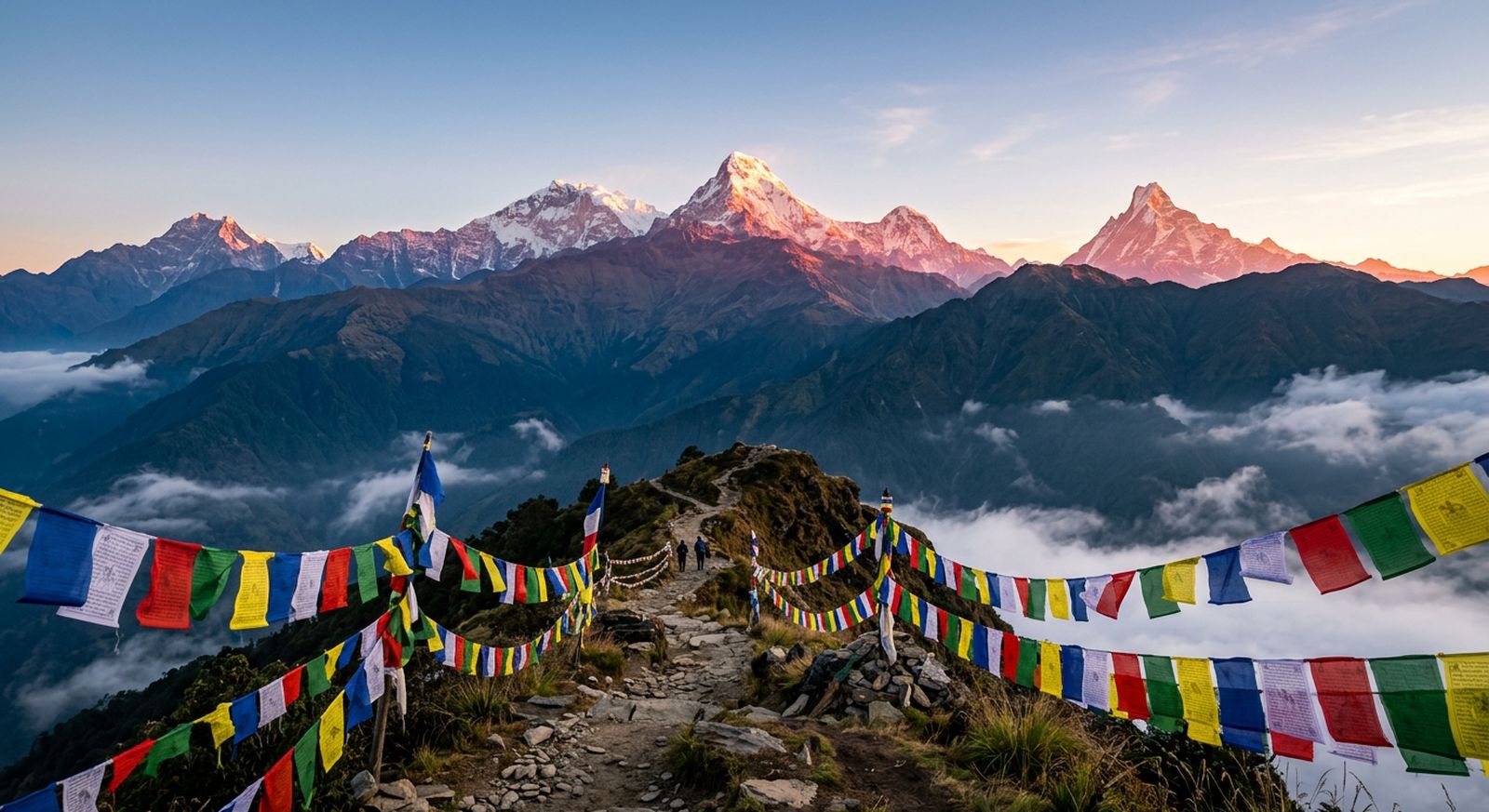
Most visitors to Nepal, including travellers from Sweden and the rest of the EU, can get a tourist visa on arrival at Kathmandu's Tribhuvan International Airport, or apply online before they fly. Here is what it costs, which documents you need, how the airport process works and what changed with the new eVisa in 2026. Every fee below is from Nepal's Department of Immigration and was checked October 2026.
Visa fees in 2026
The Department of Immigration publishes the same three tourist visa tiers for arrival and online applications. All are multiple entry and run from the date you enter Nepal:
- 15 days: USD 30
- 30 days: USD 50
- 90 days: USD 125
- Transit visa (up to 24 hours): USD 5, with proof of your onward ticket
Other official charges: an extension costs USD 3 per day with a 15-day minimum (so at least USD 45), the late fine for overstaying is USD 5 per day, and an extra re-entry fee of USD 25 applies in some cases. Fees are non-refundable, and a visa must be used within six months of issue.
Which one should you pick? The 15-day visa suits a Kathmandu and Pokhara trip or the short Poon Hill trek. Choose 30 days for Everest Base Camp or Annapurna Base Camp, where weather delays can eat your buffer days.
Who can get a visa on arrival, and who travels free
- Most nationalities, including Swedish, other EU, UK and US passport holders, can get a tourist visa on arrival at Kathmandu airport and other designated entry points.
- No visa needed: Indian citizens.
- Free ("gratis") visas are listed for children under 10 (except US citizens), SAARC citizens for up to 30 days once per visa year, Chinese nationals and NRN card holders. Gratis applicants still fill in the online form.
- Not eligible on arrival: citizens of Nigeria, Ghana, Zimbabwe, Swaziland (Eswatini), Cameroon, Somalia, Liberia, Ethiopia, Iraq, Palestine, Afghanistan and Syria must apply in advance through a Nepali embassy or the mission portal.
Documents to bring
- A passport valid for at least six months from your travel date, with a free page for the visa.
- Your online form submission receipt (printed or on your phone), or be ready to use the airport kiosks.
- The fee. Card payment is offered, but carry the exact amount in clean US dollar notes as a backup; several embassies recommend bringing cash.
- Your boarding pass and the address of your first hotel.
- A recent passport photo is handy, especially for an extension later.
Option 1: the online form, then visa on arrival
You can fill in the tourist visa form on the Department of Immigration's official NepaliPort system before you travel, or at the self-service kiosks in the arrivals hall (the immigration area has free Wi-Fi). Filling it in at home saves the kiosk queue. At the airport the official sequence is:
- Fill in the arrival information card at the tables in the lobby.
- Complete the online tourist visa form (at home or at a kiosk) and keep the submission receipt.
- Pay at the bank counter for 15, 30 or 90 days and keep the payment receipt.
- Go to the immigration counter with your passport, boarding pass, arrival card and both receipts.
On a quiet day this takes well under an hour. In October, when several long-haul flights land together, allow longer.
Option 2: the eVisa (new in 2026)
The Department of Immigration now runs a full online visa through its portal at nepaliport-new.immigration.gov.np: you fill in the form, upload a scan of your passport and a photo with a white background, pay USD 30, 50 or 125 by card, and the approved visa is emailed to you to print and carry. Nepal's immigration spokesperson announced the full rollout for 17 August 2026; processing is reported to take about 24 hours, and visa on arrival continues alongside it. Check your spam folder for the approval email, and keep your Submission ID.
Use only the official government portal. Third-party "visa service" websites may charge a mark-up for the same government fee.
Extending your visa in Nepal
You can stay up to 150 days per visa year (1 January to 31 December) in total. Extensions are handled by the Department of Immigration in Kalikasthan, Kathmandu, and the Immigration Office in Pokhara: bring your passport and a passport photo. Extend before your visa expires, because the USD 5 daily late fine adds up quickly.
Visa versus trekking permits
The visa only lets you into the country. Trekking regions need their own permits, such as the Sagarmatha National Park fee and Khumbu Trek-Card for Everest or ACAP and TIMS for Annapurna. Our Everest cost guide and Annapurna beginners' guide list them.
After immigration
Change a little money or use the ATM in arrivals, buy a tourist SIM, and take the prepaid taxi or an app ride: see Kathmandu airport to Thamel. Still planning? Start with our Nepal travel guide and the best time to visit Nepal.
Contains affiliate links: we may earn a commission if you book, at no extra cost to you.
Compare Stockholm – Kathmandu flights →
Then find a hotel in Kathmandu for your first night, or see all options on our hotels page.
Sources, checked October 2026: Department of Immigration, Nepal (immigration.gov.np: visa fees and documents, and the ETA/eVisa page); TIA Immigration Office on-arrival visa process (tia.immigration.gov.np); Travel Himalaya Nepal, citing VisasNews and immigration spokesperson Tikaram Dhakal, on the 17 August 2026 eVisa rollout. This page is general information, not legal advice. Rules can change at short notice: confirm with the Department of Immigration or a Nepali embassy before you travel.
Frequently asked questions
How much is the Nepal visa on arrival in 2026?
The Department of Immigration charges USD 30 for 15 days, USD 50 for 30 days and USD 125 for 90 days. All three are multiple entry. A 24-hour transit visa costs USD 5. Fees checked October 2026.
Can Swedish citizens get a visa on arrival in Nepal?
Yes. Swedish and other EU passport holders can get a tourist visa on arrival at Kathmandu's Tribhuvan International Airport, or apply online in advance through the Department of Immigration's eVisa portal.
Can I apply for a Nepal visa online?
Yes. You can pre-fill the tourist visa form online and get the visa on arrival, or use the Department of Immigration's eVisa portal, where you pay by card and receive the approved visa by email to print. The full eVisa rollout was announced for 17 August 2026.
What documents do I need for a Nepal tourist visa?
A passport valid for at least six months, the online form receipt (or use the airport kiosks), the visa fee, your boarding pass and your hotel address. For the eVisa you also upload a passport scan and a photo with a white background.
How long can I stay in Nepal on a tourist visa?
Up to 150 days per visa year (January to December). Extensions cost USD 3 per day with a 15-day minimum and are issued by the Department of Immigration in Kathmandu and the Immigration Office in Pokhara.
Some links on this page are affiliate links: if you book through them we may earn a commission, at no extra cost to you. How we make money.
Keep reading
 Stockholm → Nepal: the complete fare guide (best months, price benchmarks and 3 cheaper routes)Best time to visit Nepal: a month-by-month planner
 Kathmandu to Pokhara: bus, flight or private car?Flying from Stockholm to Kathmandu: routes, seasons and how to pay less
 How to find cheap flights: 12 tactics that actually work
 When is the best time to book flights?
 Flying from Stockholm: airports, getting there and money-saving tipsEverest Base Camp trek cost 2026: permits, guide and porter, teahouses and Lukla flightsKathmandu airport to Thamel: prepaid taxi, Pathao, inDrive or Uber (prices and tips)Annapurna Base Camp and Poon Hill trek: a beginner's guide (routes, days, permits)Nepal SIM card and eSIM for tourists: Ncell, Nepal Telecom and travel eSIMs compared
Destination guides
NepalFeaturedKathmandu Valley, Pokhara, Chitwan National Park ThailandBangkok, Chiang Mai and the north, Phuket and Phang Nga Bay
 JapanTokyo, Kyoto, Osaka and Nara
 VietnamHanoi, Ha Long Bay and Lan Ha Bay, Sapa and the northern mountains
 Bali & IndonesiaUbud, Uluwatu and the Bukit Peninsula, Seminyak and Canggu
 IndiaDelhi, Agra, Jaipur and Rajasthan
 Sri LankaSigiriya and the Cultural Triangle, Kandy, Ella and Nuwara Eliya
 Dubai & UAEDowntown Dubai, Old Dubai and the Creek, Dubai Marina and the beaches
 SingaporeMarina Bay, Hawker centres, Chinatown, Little India and Kampong Glam